When I was in the sixth grade, my friend and I had an absurd argument. We were trying to determine which is the superior- biology or chemistry. I thought that biology was life, thus making it supreme (everyone has a past). We never really settled the argument and we both held on to our opaque beliefs, respectively. Since then, my philosophical views on science shifted drastically. So, I thought that for the sake of closure, I shall prove us both wrong.
To better explain my argument, I’ll use neurology as a leading example. Let’s start by presenting a neuron. A neuron is generally made up of three main realms: the axon, dendrites, and the soma. Simple biology.
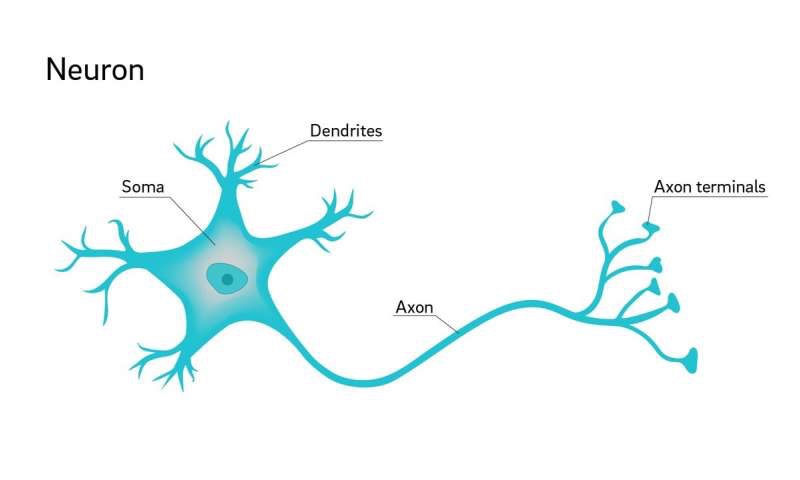
Now, for the neuron to be stable, it needs to be in either a state of equilibrium or a steady state. For this to happen, multiple factors need to contribute for the neuron to exist in a balanced environment. In a nutshell, cations surrounding a neuron’s membrane have to be distributed in a gradient via ion channels. This can be justified by scanning the foundational laws of chemistry.
Finally, neurons need to communicate per the usage of electrical signals. Without them, we wouldn’t be able to do anything at all. In fact, we’d be dead. See, not only can we describe the phenomenon by utilising physics, we can also calculate voltage, resistance, current, etc.
See, my point is this: even though we tend to play the sciences against one another, none of the would be of use without the latter. Physicists point and laugh at engineers, chemists make fun of biologists, and geologists are the butt of every joke. The truth is though, the uniting of the sciences is beyond powerful. Ergo, maybe we should marvel at the beauty of their integrality rather their incongruity.
 Physics And Stuff